
Finding Lebanon Resident Records
Lebanon has no single public roll of everyone who lives in the city. The useful record depends on the question. An address usually starts with the county parcel map. A past owner can lead to the deed chain. A dated phone book or cross-reference volume can supply a historical household lead. A court docket can confirm a filed case, but not every underlying document. Keep the source date beside every note because a current assessment record and a 1940 telephone listing describe different moments.
Begin with one precise identifier and add a second source before treating a match as reliable. The strongest combinations are an address and parcel number, a deed reference and legal description, or a name and an independently dated archive entry. An owner of record is not necessarily every person at that address. Likewise, an absent result may reflect a restricted record, a name variation, a different custodian, or a period that is not online.
- For a street address, search the County Property Viewer by address or map number and save the matching parcel identifiers.
- Use the listed owner, deed book and page, or legal description to select the next records office, rather than assuming the address itself searches every database.
- For a name, compare a public docket, a recorded-document party, or an institutional historical record with a second independent source.
- For an old address, check a Lebanon City cross-reference directory, then the telephone directories and the deed or estate trail for the same period.
- When the needed record is not online, ask the custodian for a defined record, inspection, or copy and include the address, UPI, case number, or date range.
Note: A careful Lebanon resident search separates current ownership, dated household clues, and protected personal information before drawing conclusions.
Lebanon Resident Records Offices
Because Lebanon is the county seat, several key custodians are concentrated around the Municipal Building. Assessment maintains the current property-file context. The Recorder preserves recorded real-estate documents. Elections handles registration administration and regulated voter-file requests. The Register of Wills and Clerk of Orphans' Court handle marriage, estate, guardianship, and probate work, while the Clerk of Courts handles Common Pleas criminal and juvenile filings. Each office answers a different question, so a broad request for a resident list is less useful than a specific request for a known record.
The city has a separate records path for defined permits, zoning files, code notices, and council material, not an open citywide name database. For an address-focused sequence from parcel map to recorded document, use the Lebanon street address directory.
Lebanon County Recorder of Deeds
Room 107, Municipal Building
400 S. 8th St., Lebanon, PA 17042
717-228-4447
Recorded-property copies, certifications, and alert information
Lebanon County Board of Assessment
Municipal Building
400 S. 8th St., Lebanon, PA 17042
717-228-4425
Lebanon County Elections
Room 209, Municipal Building
400 S. 8th St., Lebanon, PA 17042-6794
717-228-4428
Registration, updates, and historical-election records
Lebanon Property Viewer Records
The free County Property Viewer is the best official start when an address or map number is known. It does not offer owner-name searching. That design matters: it keeps the tool anchored to a property question rather than a bulk person search. Search a physical address or the displayed map number, select the correct parcel, and preserve the owner-of-record and mailing context separately from the site address. County tax-map boundaries are approximate, not a legal survey or proof of title.
The viewer uses address and map-number paths, not a broad ZIP or owner browse. A configured popup can show a parcel, deed book and page, municipality, assessments, or sale context. Confirm a transfer with the Recorder. For a street sequence, work one selected property at a time.
| Property Viewer field | Input or control | Verified use |
|---|---|---|
Property by Address / SITUS_ADDR | Free-text autocomplete | Partial match, with up to six suggestions and ten results. |
Property by Map Number / MAP_NUMBER | Free-text autocomplete | Partial match, with the same suggestion and result limit. |
| Manufactured Home by Address | Free-text address | Separate address source for manufactured homes. |
LebCo Geocoder SingleLine | Free text | Search by address or map, then select the correct result. |
| Parcel click and popup arrows | Map selection | Choose a parcel and move through overlapping selected features. |
Lebanon UPI Records Bridge
A UPI, or Universal Parcel Identifier, connects the tax-map side of Lebanon research to the recorded-document side. Capture the UPI or map number and the popup's deed book and page before leaving the viewer. Lebanon's Recorder requires a UPI on real-estate records, and the county's rules match it with the site address, municipality, parties, and the earlier acquisition reference. Those details remain useful when a street name is abbreviated differently or a parcel description has changed.
Recorded documents are reached through the Recorder's account or WebStore channel, not by a simple house-number search. The deed index covers 1813 to 1878 and 1922 to the present; images cover 1813 to 1878 and 1926 to the present. The 1879 to 1921 index gap needs a counter visit or historical alternative.
| Access route | Best Lebanon use | Access context |
|---|---|---|
| County Property Viewer | Address or map-number parcel starting point | Free browser map with approximate tax boundaries. |
| Recorder remote or WebStore path | Recorded document retrieval after identifiers are known | Account or online-payment route, with coverage differences by era. |
| Recorder counter | Copies, certified copies, and a fallback for gaps | Custodian procedure and current fees apply. |
| Hauck Research Archives microfilm | Historic deed-index bridge | Local research access for the 1813 to 1932 index run. |
Note: A UPI bridges the map and title systems, but the recorded legal description is the stronger continuity check for a boundary question.
Current Lebanon Resident Directories
Current directory-like sources in Lebanon are targeted records, not a complete resident register. Assessment shows owner-of-record and mailing-address context for a parcel. Recorded documents show property parties. Court dockets show public case participants and status. Election, vital, probate, license, and archive sources answer narrower questions. Read each result as evidence of the record's purpose, not proof of every person associated with an address.
| Lebanon source | What it can identify | Custodian | Access boundary |
|---|---|---|---|
| Property Viewer and assessment file | Current owner of record and mailing-address context | Board of Assessment | Address or map-number start; owner is not the same as every occupant. |
| Recorded documents | Parties, conveyance trail, and legal-description evidence | Recorder of Deeds | Account, purchase, or counter route; historic coverage has gaps. |
| Public court dockets | Named party, court, case, date, and public status | Judiciary and local clerks | Some matters and details are restricted or can lag online. |
| Registration status and voter-list route | Personal status or regulated election data | County Elections and Pennsylvania | Self-status is not an open roster; list use has statutory conditions. |
| Historical directories and archives | Dated name, address, or subscriber clue | LCHS, LOC, and archives | Historical and incomplete, not evidence of a present household. |
For a single person, record the source URL, search date, spelling used, role shown, and the identifier that makes the result distinct. A name alone is often weak evidence. Reconcile one name across independent records rather than trace an address.
Lebanon Voter Record Boundaries
Pennsylvania's voter-registration status service is for a person's own registration and polling-place information. It is not a searchable street roster. The County Elections office can help with registration and a defined historical inquiry when a full name, address, birth date, and approximate election period are available. Public voter-list products follow a separate request form and use conditions. Ballot choices remain secret, and protected addresses remain protected.
The Pennsylvania voter-registration status service shows why a statewide screen must be read by function, not by its name. A no-result can follow an address update, eligibility change, cancellation, or protected-address treatment. It does not settle whether someone ever lived in Lebanon. Use County Elections for the right procedure instead of attempting to match another person with a similar name.
The official Pennsylvania status screen is shown below. It is a personal-status service, not a directory of people.
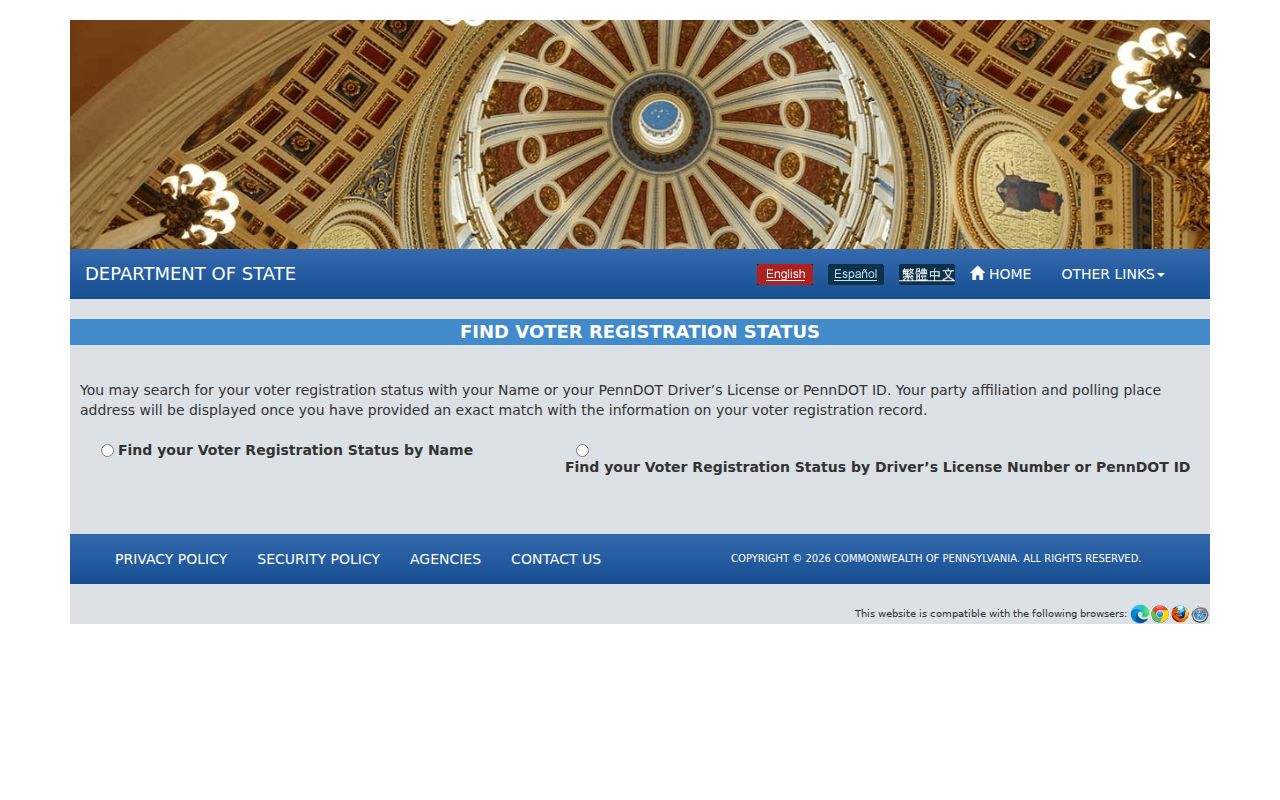
The status screen supports personal verification. It should not be used to assemble a list of Lebanon residents.
The Lebanon County Elections office page offers the local administrative route when a person needs registration help or a narrowly defined historical request.
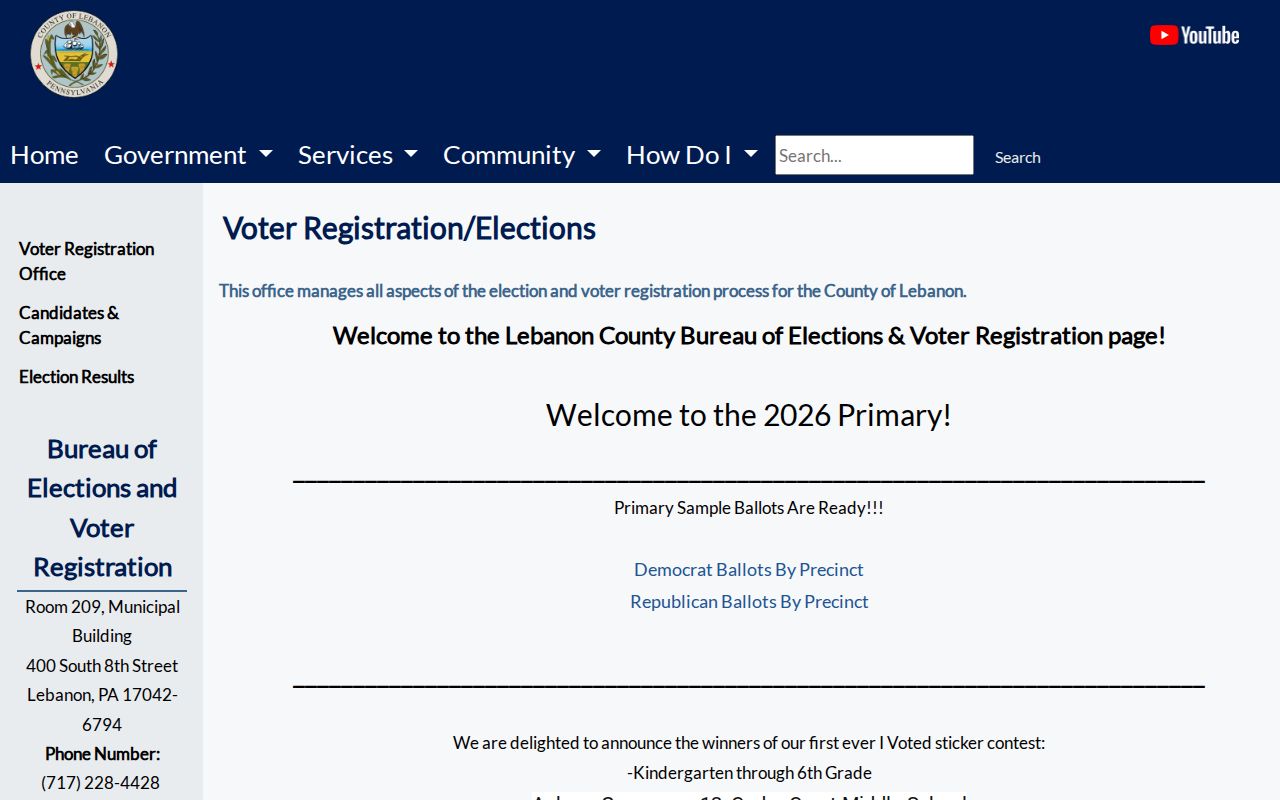
County staff maintain election records, but the public path remains controlled by Pennsylvania election rules and address protections.
Lebanon Court and Vital Records
For a public court lead, use the Pennsylvania Judiciary Web Portal Case Search to choose the correct search type, then narrow by a known case number, participant name, organization name, tracking number, or complaint number. Confirm the court and county, the party role, and the filing date. A docket sheet can establish that a public case was filed and show an event trail. It is not the same as every pleading, exhibit, or certified file, and online entries can lag.
Birth and death records take a different route. The Pennsylvania Department of Health Vital Records bureau holds 1906-forward birth, death, and fetal-death records, and staff conduct the certificate search. Lebanon marriage records belong with the Register of Wills and Clerk of Orphans' Court. A date and record type should determine the custodian.
- Parcel
- A mapped unit of property used for tax and assessment administration.
- UPI
- The Universal Parcel Identifier that helps connect a Lebanon property record to a recorded-document search.
- Index
- A finding tool that points to a record; an index hit is not necessarily the original record image.
- Docket
- The court's chronological case entry list, which may not include every accessible document.
- Criss-cross directory
- A historical address-to-name directory used to develop a dated owner or occupant clue.
Lebanon Resident Privacy Limits
Pennsylvania's Right-to-Know Law creates access to many existing government records, but it does not erase confidentiality statutes, court restrictions, or safety protections. Agencies can redact protected material. Driver and vehicle information, sealed or expunged court material, restricted vital records, military discharges held by the Recorder, and some voter information have separate rules. A defined request should name the record, date, office, and preferred form of access rather than ask an agency to create a person list.
The Pennsylvania Address Confidentiality Program gives eligible participants an alternate address for listed state and court records, voter registrations, marriage licenses, and other records. An unavailable address may be a safety measure. Do not try to work around it or draw conclusions from a mismatch.
Lebanon Recorder Record Alerts
Lebanon's Recorder offers a Landex Record Alert tied to a property's UPI. It can notify a user about recording activity associated with that identifier. The county also offers a notary alert keyed to name, commission number, and state. These alerts are sensible monitoring tools for a property owner or a person checking an unexpected filing, but they do not determine title, prove fraud, or replace a certified document from the custodian.
Pennsylvania's 2026 warning covered forged transfers and pressure to sign property documents. If an unexpected notice arrives, check the Recorder's published contact independently and compare it with a recorded copy. Do not rely on an unverified caller, message, or payment demand. The UPI remains the bridge from parcel map to record trail.
Note: A Landex alert reports a recording event, so confirm the document and any legal effect with the Recorder or a qualified professional.
Lebanon Locator Record Limits
State locator pages have narrow jurisdiction and a specific safety purpose. The Pennsylvania Department of Corrections locator covers people under state DOC jurisdiction and is updated daily, but it does not include Lebanon County facility custody. The Lebanon County Correctional Facility is the local-contact fallback when that limited state scope does not answer a custody question. A missing state result is not proof that a person has no county-facility record.
The official Pennsylvania DOC locator is pictured below. Its scope is state custody and department-supervised people, not a general Lebanon residents directory.
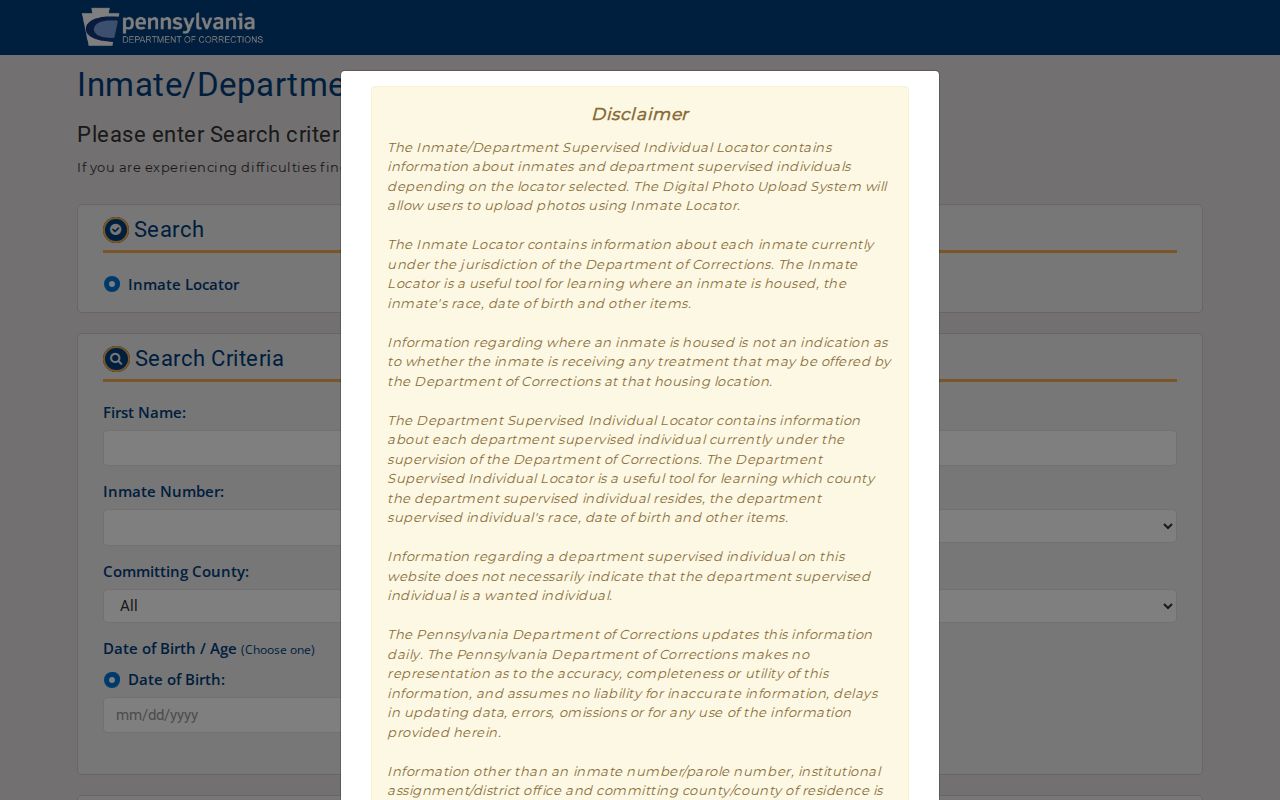
The appropriate result is a jurisdiction-specific custody lead that should be verified through the responsible agency.
The Pennsylvania State Police registry has an explicit public-protection purpose and statutory limits. It is neither a complete conviction list nor a general lookup tool. Positive identification requires more than a name match, and misuse can have serious consequences.
The Pennsylvania State Police registry warning page is the source for the legal-use notice shown below.
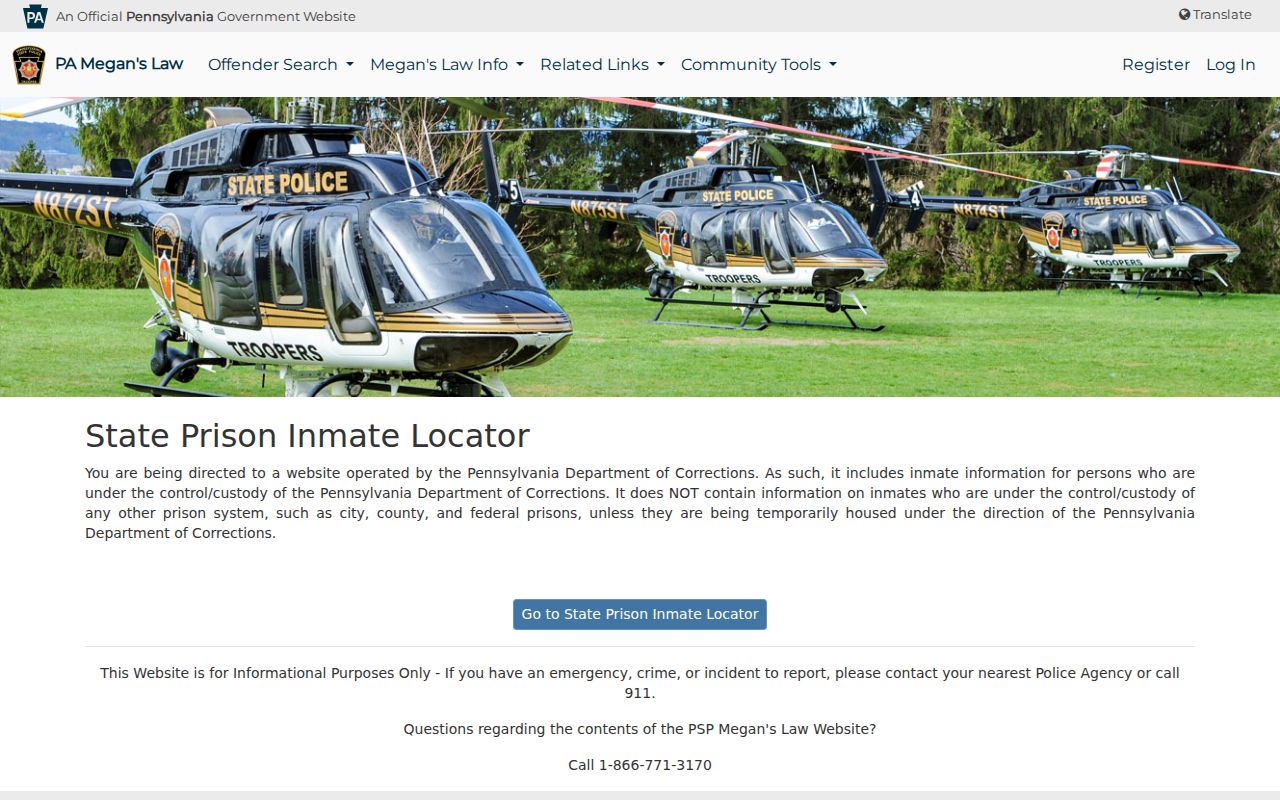
The warning explains the registry's limited public-protection role and does not create a neighbor or household lookup.
The primary Pennsylvania State Police registry likewise presents legal-use and accuracy boundaries before a search.
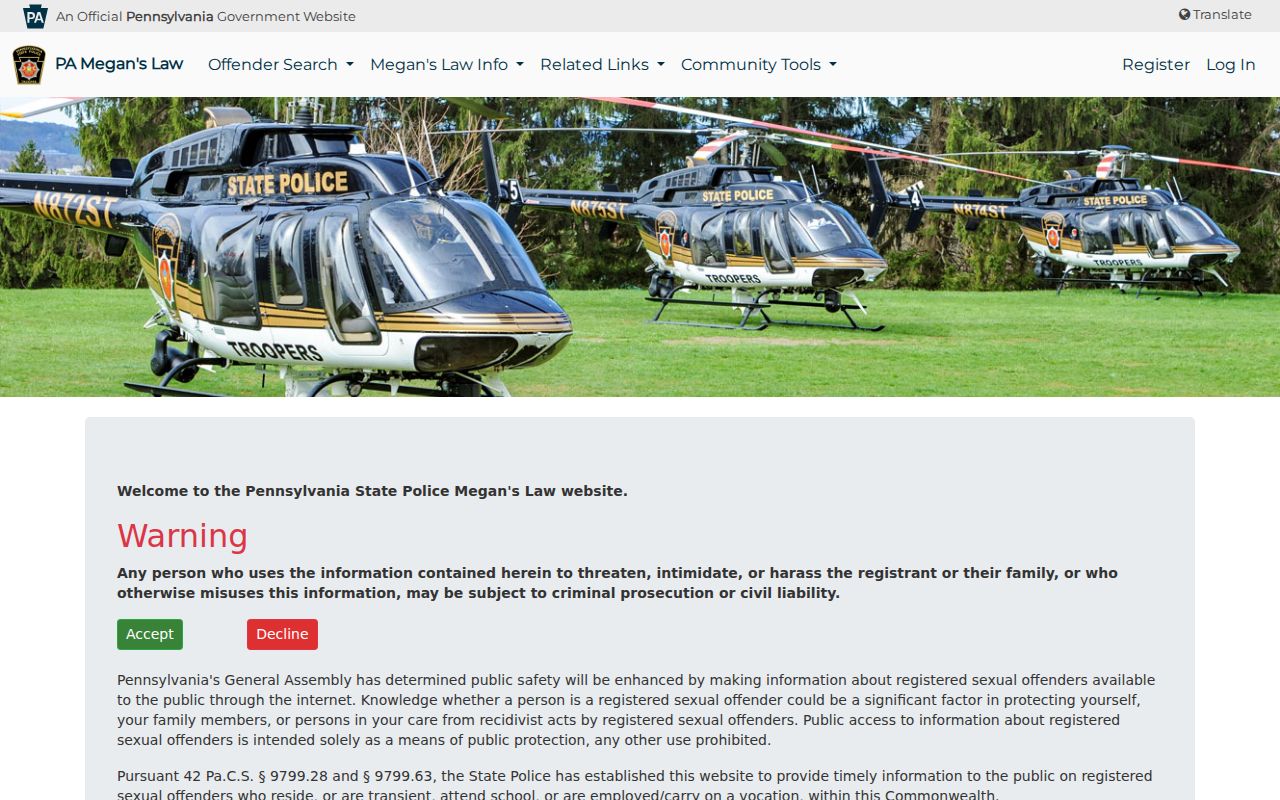
Use the official registry only within its stated public-protection purpose, and never use information to intimidate or harm a person.
Historical Lebanon Resident Directories
For a past Lebanon household, the Lebanon County Historical Society's Hauck Research Archives holds a comprehensive Lebanon City cross-reference directory collection. It starts with an address and can produce a dated owner or occupant lead, though outlying coverage is incomplete. Other local resources include the 1813 to 1932 deed-index microfilm, marriage microfilm, maps, newspapers, yearbooks, church records, cemetery surveys, and historical publications.
The Hauck Research Archives research page describes an on-site route and a remote research service. Appointments are needed for original archival material and guaranteed assistance, while most library materials and computers can be used without an appointment. The Library of Congress also has digitized Lebanon telephone directories from March 1940 through June 1948. Those pages can show a printed name, short address, phone number, or business classification for that edition. They do not establish present residence.
The Library of Congress Lebanon telephone-directory collection is a useful online supplement. Its white and yellow pages are historical evidence that needs a date and a second record for confirmation.
For the full historical-shelf workflow, including how to move between a cross-reference volume and a same-year alphabetical listing, use the Lebanon city directory collections.
Lebanon's 1813 Record Start
Lebanon County began in 1813 from parts of Dauphin and Lancaster Counties. A search for an 1800 event under Lebanon County can therefore fail for a simple jurisdictional reason. Earlier records may be filed under a parent county, while later Lebanon series begin with the new county's deed, will, estate, and court systems. The historical index term Steitztown can also help with catalog research for the earlier settlement, but it should not be used as a shortcut for present boundaries.
Statewide birth and death certification begins in 1906, with Lebanon Board of Health volumes covering part of the transition. A November 1908 courthouse fire partially destroyed the courthouse and many records, though the research does not identify every affected series. Check the Recorder, State Archives guide, Historical Society collections, and parent-county records before calling an item lost.
Note: A database gap often signals a different office or era, not proof that Lebanon historical records no longer exist.
Lebanon Address Record Jurisdictions
Lebanon is both a city name and the county-seat place name, but postal, municipal, and parcel geography do not always align. The City is served by ZIP codes 17042 and 17046, which overlap City wards in the county parcel snapshot. A ZIP code can help disambiguate an address, but it does not prove City limits, ward, precinct, or parcel municipality. Check the actual property and the record's stated jurisdiction before comparing maps, permits, deeds, or election information.
Plain street text can also vary by era. County records point to a 2021 Walnut Street segment name change, yet the reviewed material does not provide a citywide renumbering history. When an old address does not match a modern search, preserve the address as printed, then compare the UPI, legal description, lot or subdivision reference, and historical map context. The Property Viewer may help locate the current parcel, while the deed description is the stronger link across an address change.
Lebanon Counter Records and Archives
Online access is only one channel. The Recorder can provide copies and certified copies at its counter. Assessment can address a property-file question. The Clerk of Courts, Register of Wills, and Elections office each have their own procedures. For City-held administrative material with no public search, make a written Right-to-Know request identifying the record with an address, date range, or application number. Pennsylvania's standard response period is generally five business days, subject to a written extension.
For older Lebanon research, the Hauck Research Archives, State Archives film guides, historical directories, and county counters are the documented fallback chain. State what you seek, the period involved, the spelling used, and any parcel, book-and-page, case, or archive reference already found. That makes it possible for a custodian or archive to locate an existing record without being asked to solve an open-ended identity question.